
> Scarica l'articolo in formato PDF
Nuove strategie terapeutiche per il mesotelioma Pleurico Maligno: le cellule CAR T
INTRODUZIONE
Come è noto, il mesotelioma pleurico maligno (MPM) è una neoplasia aggressiva, che non è molto responsiva al trattamento standard oggi attivo in pratica clinica e che mantiene una prognosi infausta.
Tuttavia, nuovi approcci immunoterapeutici sono attualmente in fase di sperimentazione e, in particolare, vi sono dei dati relativi alla possibilità di disegnare terapie mirate a target specifici. Uno di questi è l’antigene associato al tumore mesotelina.
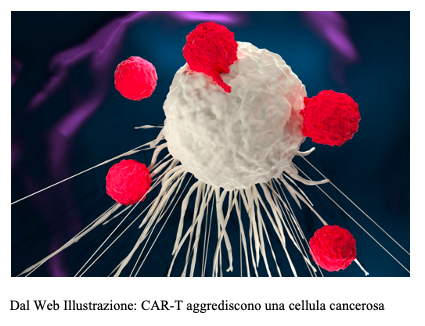
In questo contesto si stanno sviluppando nuove strategie terapeutiche quali la possibilità di utilizzare cellule CAR T disegnate in laboratorio, in modo che abbiano come bersaglio la mesotelina.
La seguente revisione bibliografia mira a raccogliere i dati di letteratura relativi all’applicazione dell’approccio terapeutico con CAR T al mesotelioma pleurico maligno, considerando tale strategia di trattamento come una prospettiva futura per migliorare la prognosi e gli outcomes dei pazienti affetti da tale neoplasia.
Si cercherà, dunque, di dare alcune risposte a semplici domande che il lettore potrebbe porsi nell’affrontare questi argomenti complessi, ma volti all’innovazione terapeutica nell’ambito del Mesotelioma Pleurico Maligno.
MESOTELINA
La mesotelina (MSLN) è stata scoperta nel 1992 nel tentativo di trovare nuovi bersagli di superficie per l'immunoterapia, tramite l’applicazione di anticorpi monoclonali.
È espressa a bassi livelli nelle cellule mesoteliali sane della pleura, del pericardio e del peritoneo, mentre idealmente ogni tessuto neoplasitoc di MPM potrebbe mostrare una significativa espressione di MSLN.
Il ruolo fisiologico della MSLN nei tessuti sani non è attualmente completamente chiarito. La MSLN è inizialmente espressa come una proteina di 71 kDa, che viene poi scissa dalla furina, provocando il rilascio di una proteina di 31 kDa, chiamata fattore potenziante dei megacariociti (MPF), mentre il frammento rimanente di 40 kDa rimane legato alla membrana cellulare attraverso un'ancora glicosilfosfatidilinositolo (GPI).
Maturazione della mesotelina (MSLN).
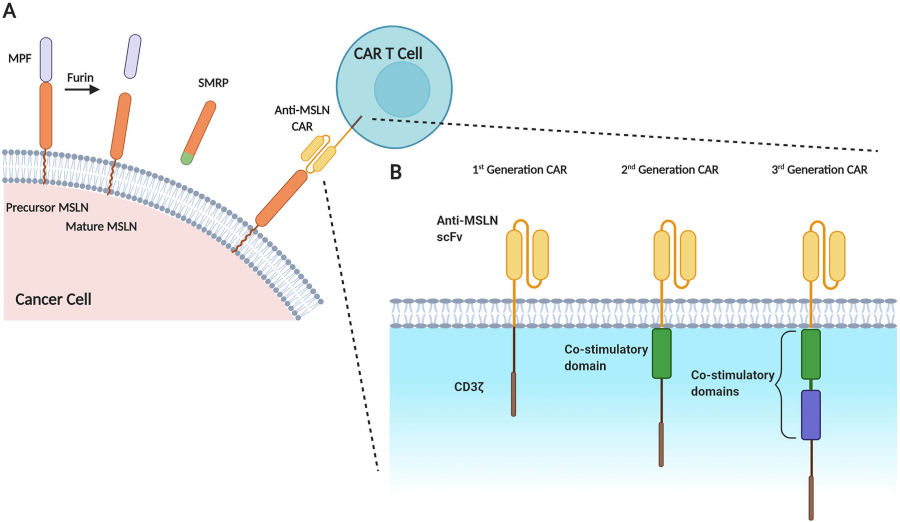
Immagine tratta dall’articolo di Castelletti et al. Biomarker Research (2021)
La MSLN di superficie può anche essere rilasciata creando peptide solubile legato alla mesotelina (SMRP) che può anche essere rilevato nel sangue dei pazienti con MPM.
La MSLN è stata al centro della ricerca sull'immunoterapia fin dalla sua scoperta.
Le caratteristiche che rendono MSLN un ideale bersaglio immunoterapeutico nel MPM sono molteplici, ma possono essere riassunte come segue:
- l'alto livello di espressione di MSLN nel tessuto tumorale e una bassa o nulla espressione nei tessuti sani, riducendo così le possibili tossicità;
- l'85-90% dei casi nel sottotipo epitelioide di MPM presentano un'alta espressione di MSLN [12];
- la sua espressione ad alti livelli è stata associata a una maggiore aggressività e invasività.
La MSLN è costituita come segue.
Il dominio extracellulare di MSLN comprende tre elementi contigui:
- la regione I (residui 296-390),
- la regione II (391-486),
- la regione III (487-598).
La regione I è la parte distale della membrana e può legarsi alla mucina MUC16 (nota anche come CA125), che è anche espressa dalla maggior parte delle cellule MPM ed è associata alle caratteristiche di aggressività neoplastica. Questa interazione MSLN-MUC16 si dimostrata di grande importanza per l'adesione e la metastastatizzazione delle cellule tumorali ed è il bersaglio principale delle attuali immunoterapie, compresa la terapia con cellule CAR T.
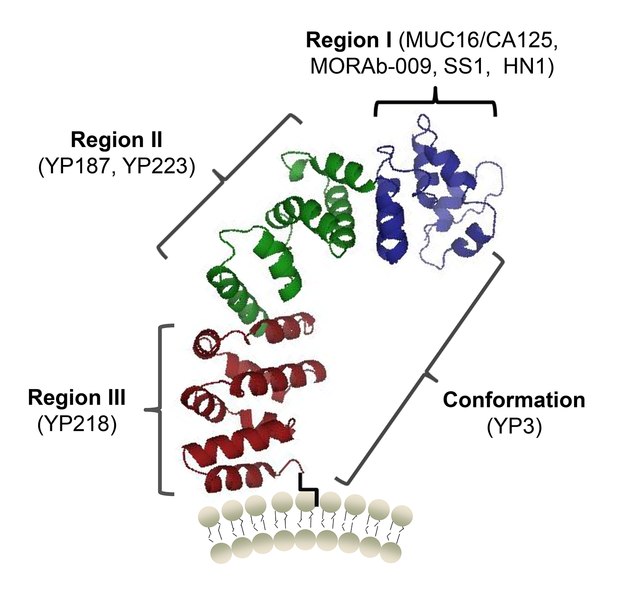
Un modello di struttura proteica della mesotelina umana
CELLULE CAR T
Cosa sono le terapie cellulari?
La terapia cellulare si basa sull’impiego di cellule ematologiche (ottenute dal sangue) e modificate geneticamente in laboratorio, attraverso specifiche metodiche dell’ingegneria molecolare. Per procedere con questi approcci genetici, sono necessarie strumentazioni molto complesse e laboratori dedicati ed attrezzati.
Le cellule, opportunamente ingegnerizzate, possono essere iniettate nell’organismo malato, dove potranno svolgere l’attività terapeutica desiderata e programmata.
Cosa significa CAR?
CAR è una sigla che viene utilizzata per indicare i recettori chimerici dell'antigene, definiti anche immunorecettori chimerici o recettori chimerici delle cellule T o recettori delle cellule T artificiali. In pratica, si tratta di proteine recettoriali, progettate per dare ai linfociti T la nuova capacità di individuare uno specifico bersaglio proteico. I recettori sono definiti “chimerici”, perché combinano in un recettore unico sia le funzioni di legame dell'antigene sia quelle di attivazione dei linfociti T.
Cosa sono le CAR-T?
Le cellule CAR T, dunque, sono cellule del recettore chimerico dell'antigene e sono linfociti T modificati geneticamente. Lo scopo principale dell’ingegnerizzazione di tali cellule è quello di produrre un recettore delle cellule T artificiale, che viene applicato nella terapia di alcune neoplasie ematologiche. Si tratta, dunque, di un esempio convincente dell’efficacia clinica delle terapie cellulari, che producono CAR-T “educate geneticamente” a cercare, riconoscere e eliminare le cellule neoplastiche.
Come si producono le CAR-T?
La produzione di CAR-T è estremamente complessa.
Inizialmente, venie effettuato un prelievo di sangue del paziente che viene trattato laboristicamente per suddividere il materiale cellulato (le cellule sanguigne) dal plasma, tramite una tecnica definita aferesi. Tale procedimento consente di raccogliere ed isolare i linfociti del paziente. Tali cellule vengono poi inviate a laboratorio specializzati nell’ingegnerizzazione seguendo ben definiti protocolli scientifici.
Dopo aver isolato le cellule T, viene introdotto il recettore CAR (Chimeric Antigen Receptor), che è in grado di riconoscere le cellule tumorali. Infatti, tali linfociti T, definiti a questo punto CAR-T, esprimono un recettore superficiale che individua antigeni specifici espressi dalle cellule neoplastiche.

In cosa consiste la terapia con CAR-T?
In generale si può affermare che la terapia con le CAR-T sfrutta le cellule T ingegnerizzate con CAR l’approccio terapeutico di alcune neoplasie. Il razionale di questa applicazione terapica è la capacità delle cellule CAR T di modificare le cellule T in modo che siano in grado di riconoscere il tumore e, quindi, attaccarlo e combatterlo nella maniera più efficace possibile.
Tale trattamento viene portato a termine partendo dal sangue del paziente, che viene prelevato e lavorato in laboratorio, portando all’estrazione delle cellule T. Tali cellule, dopo essere state adeguatamente isolate, vengono quindi trattate utilizzando un vettore, che solitamente consiste in un lentivirus modificato, per fare in modo che siano in grado di esprimere uno definito CAR che le indirizzi verso un antigene tumorale specifico. E’ fondamentale che le cellule CAR T siano progettate come specifiche per antigeni tipici delle cellule neoplastiche e meno presenti sui tessuti sani, per designare così un trattamento che sia il più efficace, ma anche il meno tossico possibile.
Dopo tale trattamento, le cellule così modificate possono essere reinfuse nei pazienti affetti da neoplasie. In particolare, le cellule CAR T possono essere definite:
- autologhe, se derivano dalle cellule T del paziente,
- allogeniche, se derivano da un donatore sano.
Le CAR-T distruggono le cellule neoplastiche attraverso diversi meccanismi, tra questi sono in grado di aumentare il grado di tossicità (citotossicità), possono costituire all’incremento della secrezione di fattori che influenzano citochine, interleuchine e fattori di crescita. Proprio per questa loro azione, tra gli effetti collaterali dell’applicazione terapeutica delle CAR-T, vi è la cosiddetta “tempesta di citochine”, che può creare gravi danni, legati all’attivazione citochinica e ad altri fattori quali per esempio il volume tumorale e lo stato fisiopatologico specifico del paziente. Tale reazione avversa avviene solitamente nei primi giorni dopo la somministrazione terapeutica ed è spesso trattata con corticosteroidi e inibitori di IL6 (tocilizumab).
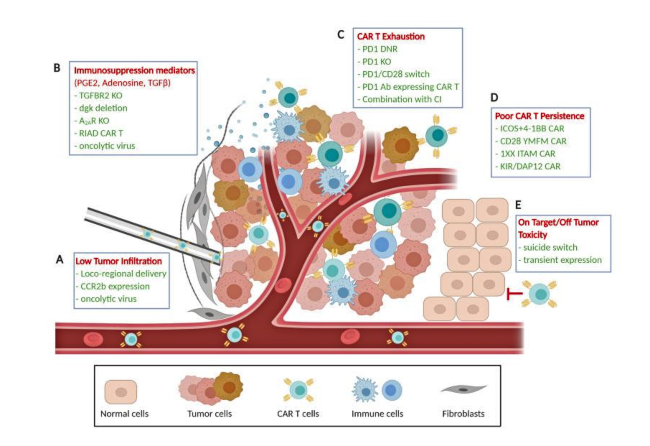
Immagine tratta dall’articolo di Castelletti et al. Biomarker Research (2021)
TERAPIA CON CAR-T E MESOTELIOMA PLEURICO MALIGNO
Le cellule CAR-T utilizzate contro il mesotelioma pleurico maligno, sono linfociti T ingegnerizzati per avere come bersaglio la mesotelina.
Come è noto, la terapia con cellule CAR-T è efficace nelle patologie neoplastiche ematologiche e le applicazioni ad oggi note per i tumori solidi sono limitate.
Nel 2019, al congresso dell’American Association fort Cancer Research (Aacr), alcuni scienziati avevano mostrato risultati incoraggianti contro questo tipo di tumore toracico, prendendo di mira la mesotelina ed utilizzando CAR-T specifiche per questo bersaglio.
I primi risultati di uno studio (trial) di fase I sono stati presentati nel marzo 2019 al meeting annuale dell’American Association Cancer Research (Abstract CT036) e poi ancora sul Journal dell’American Society of Clinical Oncology (ASCO – Abstract 2511).
In modo riassuntivo questi erano i risultati di questo studio preliminare: sono stati trattati 21 pazienti con malattia pleurica maligna (19 MPM, 1 cancro ai polmoni, 1 cancro al seno) (il 40% aveva ricevuto ≥3 linee di terapia precedente). 18 pazienti hanno ricevuto il precondizionamento con ciclofosfamide, la prima coorte non ha ricevuto ciclofosfamide. A 12 pazienti sono state somministrate cellule T CAR utilizzando una procedura di radiologia interventistica. Un paziente ha avuto neutropenia febbrile di grado 3 legata alla ciclofosfamide, mentre non sono state osservate tossicità legate alle cellule CAR T superiori al grado 2. L'ultima coorte di pazienti è stata ricoverata 2 settimane dopo l'infusione con una temperatura di >38 ° C e affaticamento. L'intenso monitoraggio della tossicità, effettuata tramite valutazione clinica (dolore toracico o addominale), radiologica (CT/PET o ecocardiogramma per versamento pericardico, ascite), laboratoristica (aumento della troponina) e di altro tipo (elettrocardiogramma), non ha documentato alcuna tossicità. Un paziente è stato sottoposto con successo a resezione chirurgica a scopo curativo 6 settimane dopo l'infusione di cellule T CAR. Le cellule T CAR sono state rilevate nel sangue periferico di 13 pazienti (dal 1° giorno alla 38° settimana). La persistenza delle cellule T era associata alla diminuzione dei livelli sierici di serial serum soluble MSLN-related peptide (>50% rispetto al pretrattamento) e all'evidenza della regressione del tumore negli studi di imaging. Una volta stabilita la mancanza di tossicità (6-17 settimane dopo l'infusione delle cellule T CAR), 14 pazienti sono stati trattati con immunoterapia ed hanno ricevuto agenti di blocco del checkpoint anti-PD1 (1-21 cicli) senza tossicità. La migliore risposta tra i 19 pazienti MPM (13 pazienti hanno ricevuto un agente anti-PD1; PD-L1 <10% in tutti tranne 1) è stata ottenuta da 2 pazienti che hanno avuto una risposta metabolica completa alla PET (60 e 32 settimane in corso); 5 con risposta parziale e 4 con malattia stabile.
Qualche mese più tardi, al congresso europeo di oncologia medica (ESMO – Barcellona), vengono proposti i primi risultati di uno studio di fase I che ha utilizzato le cellule CAR-T in tre pazienti affetti da mesotelioma pleurico maligno. Si trattava di uno studio limitato a pochissimi pazienti, infatti, condotto su appena tre malati di mesotelioma pleurico maligno, ma che segnava una nuova possibile strada da percorrere contro questa malattia.
Alessandra Curioni Fontecredo, ricercatrice italiana, responsabile del Gruppo Tumori Toracici presso il Dipartimento di Oncologia ed Ematologia all’ospedale universitario di Zurigo racconta la ricerca in merito ed in una intervista commenta il suo studio dicendo: “...abbiamo somministrato le CAR-T, sviluppate in collaborazione con l’Università di Zurigo, a tre pazienti con mesotelioma pleurico, all’interno di uno studio di fase I. Il recettore chimerico utilizzato, “montato” sui linoficiti T e in grado di riconoscere le cellule tumorali, prende di mira una molecola nota coma FAP, acronimo di fibroblast activating protein: questa molecola è espressa in molti tumori epiteliali, come quelli del colon o dell’ovaio, ed è molto presente in particolare nei mesoteliomi: si trova in circa l’80% dei casi. L’idea di partire proprio dai mesoteliomi è che in questo caso i ricercatori possono procedere con una terapia locale, con iniezione delle cellule CAR-T direttamente a livello della cavità toracica. Non possiamo dir nulla circa l’efficacia della terapia, anche perché i pazienti inclusi nello studio sono stati sottoposti a chemioterapia prima e dopo la somministrazione delle CAR-T, ma dal punto di vista della sicurezza non abbiamo riscontrato effetti collaterali gravi né tossicità collegate alle cellule infuse. Dei tre pazienti trattati, uno è vivo a un anno dal trattamento e un altro a due anni. Al momento questo studio, il primo in Europa sui tumori solidi, è stato interrotto, ma stiamo lavorando per ottimizzare il recettore chimerico, per esempio tramite l’aggiunta di altre molecole di stimolazione e speriamo di avviare una nuova sperimentazione il prossimo anno”.
Da questi spunti si è aperto un nuovo panorama terapeutico per il mesotelioma pleurico maligno e diversi studi sono stati proposti in ambito scientifico, per cercare di confermare questi dati e di approfondire tali scoperte. Qualora il lettore fosse interessato, si rimanda alla bibliografia indicata al termine di tale revisione.
In questa revisione bibliografica ci piace riportare in particolare una delle ultime ricerche a riguardo.
Si tratta di uno studio pubblicato a Luglio del 2021, quindi recente, su una rivista scientifica prestigiosa.
In questa ricerca, è stata testata la terapia con CAR-T che avevano come bersaglio la mesotelina. In pratica, è stata effettuata una somministrazione intrapleurale di 0,3M a 60M di cellule T CAR/kg in 27 pazienti totali, tra i quali vi erano 25 malati di MPM.
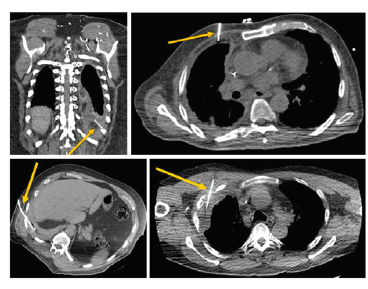
La somministrazione avveniva iniettando la terapia attraverso un catetere pleurico già in sede, oppure mediante metodiche di radiologia interventistica.
Le cellule CAR T sono state rilevate nel sangue periferico per >100 giorni nel 39% dei pazienti.
Studi precedenti avevano documentato la possibilità di associare la terapia con CAR-T all’immunoterapia, già nota ed ampiamente applicata alle neoplasie toraciche. Più nel dettaglio, tali studi sperimentali, effettuati su topi, avevano dimostrato che il blocco PD-1 migliora la funzione delle cellule CAR T nei topi. Partendo da questi dati preliminari, è stato disegnato uno studio sull’uomo di associare alla terapia con CAR-T il pembrolizumab (anticorpo monoclonale immunoterapico). Tale sperimentazione è avvenuta su 18 pazienti con mesotelioma: tra questi pazienti, la sopravvivenza globale mediana dall'infusione delle cellule CAR T è stata di 23,9 mesi (sopravvivenza globale a 1 anno, 83%).
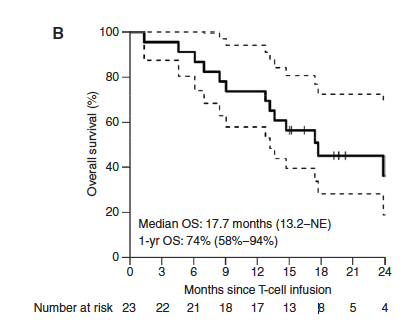
Il grafico rappresenta la sopravvivenza dei pazienti con mesotelioma pleurico maligno trattati in questo studio.
La malattia stabile è stata sostenuta per ≥ 6 mesi in 8 pazienti; 2 hanno mostrato una risposta metabolica completa sulla PET. Pertanto, gli studiosi hanno sottolineato in questo studio come i dati supportano lo studio dell'immunoterapia combinata con cellule T CAR e agenti bloccanti PD-1 nei tumori solidi.
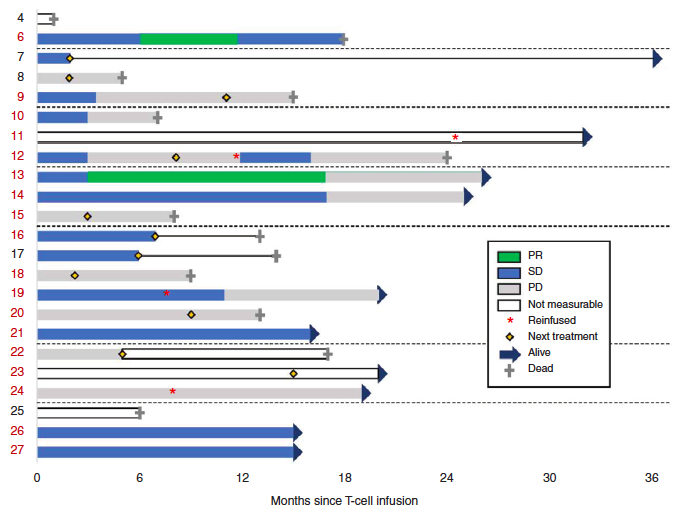
Il grafico rappresenta gli outcomes dai pazienti affetti da MPM trattati in questo studio
(PR = Partial Response, SD = Stable Disease, PD = Progression Disease.)
Le fotografie seguenti dimostrano esempi pratici di risposta al trattamento in pazienti con mesotelioma.
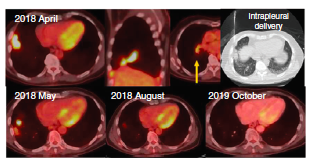
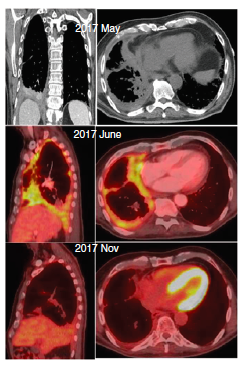
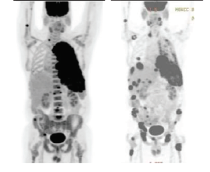
I ricercatori hanno concluso che la somministrazione locale della terapia con cellule T CAR mirata alla mesotelina e seguita dalla somministrazione di pembrolizumab è fattibile, sicura e dimostra evidenza di efficacia antitumorale in pazienti con malattie maligne della pleura.
CONCLUSIONI
Lo studio delle cellule CAR T ha permesso di analizzare la loro applicazione non solo per le malattie ematologiche, ma anche per i tumori solidi.
Tra questi, il mesotelioma pleurico maligno, è diventato potenziale bersaglio di tali trattamenti.
Specifiche cellule del sistema immunitario opportunamente ingegnerizzate, diventano efficaci contro target specifici e se questi bersagli si trovano sulle cellule neoplastiche del mesotelioma pleurico maligno, ecco che è possibile disegnare strategie terapeutiche ben definite.
Un nuovo approccio terapeutico in questo panorama di innovazione per il mesotelioma pleurico maligno è rappresentato dall’applicazione delle cellule CAR T e risultati preliminari a questo proposito mostrano interessanti risvolti traslazionali ed offrono prospettive future incoraggianti.
Ulteriori studi dedicati potranno confermare tali ricerche e portare eventualmente in pratica clinica nuove terapie per questa patologia pleurica.
REFERENZE
-
Vogelzang NJ, Rusthoven JJ, Symanowski J, Denham C, Kaukel E, Ruffie P, et al. Phase III study of pemetrexed in combination with cisplatin versus cisplatin alone in patients with malignant pleural mesothelioma. J Clin Oncol 2003;21:2636–44.
-
Zalcman G, Mazieres J, Margery J, Greillier L, Audigier-Valette C, Moro-Sibilot D, et al. Bevacizumab for newly diagnosed pleural mesothelioma in the Mesothelioma Avastin Cisplatin Pemetrexed Study (MAPS): a randomised, controlled, open-label, phase 3 trial. Lancet 2016;387:1405–14.
-
Ujiie H, Kadota K, Nitadori JI, Aerts JG, Woo KM, Sima CS, et al. The tumoral and stromal immune microenvironment in malignant pleural mesothelioma: a comprehensive analysis reveals prognostic immune markers. Oncoimmunology 2015;4:e1009285.
-
Bograd AJ, Suzuki K, Vertes E, Colovos C, Morales EA, Sadelain M, et al. Immune responses and immunotherapeutic interventions inmalignant pleural mesothelioma. Cancer Immunol Immunother 2011;60:1509–27.
-
Klampatsa A, O’Brien SM, Thompson JC, Rao AS, Stadanlick JE, Martinez MC, et al. Phenotypic and functional analysis of malignant mesothelioma tumor-infiltrating lymphocytes. Oncoimmunology 2019;8:e1638211.
-
Awad MM, Jones RE, Liu H, Lizotte PH, Ivanova EV, Kulkarni M, et al. Cytotoxic T cells in PD-L1-positive malignant pleural mesotheliomas are counterbalanced by distinct immunosuppressive
-
Yarchoan M, Albacker LA, Hopkins AC, Montesion M, Murugesan K, Vithayathil TT, et al. PD-L1 expression and tumor mutational burden are independent biomarkers in most cancers. JCI Insight 2019;4:e126908.
-
Cantini L, Hassan R, Sterman DH, Aerts J. Emerging treatments for malignant pleural mesothelioma: where are we heading? Front Oncol 2020;10:343.
-
Baas P, Scherpereel A, Nowak AK, Fujimoto N, Peters S, Tsao AS, et al. First-line nivolumab plus ipilimumab in unresectable malignant pleural mesothelioma (CheckMate 743): a multicentre, randomised, open-label, phase 3 trial. Lancet 2021;397:375–86.
-
Newick K, Moon E, Albelda SM. Chimeric antigen receptor T-cell therapy for solid tumors. Mol Ther Oncolytics 2016;3:16006.
-
June CH, Sadelain M. Chimeric antigen receptor therapy. N Engl J Med 2018;379:64–73.
-
Chen N, Li X, Chintala NK, Tano ZE, Adusumilli PS. Driving CARs on the uneven road of antigen heterogeneity in solid tumors. Curr Opin Immunol 2018;51:103–10.
-
Kiesgen S, Chicaybam L, Chintala NK, Adusumilli PS. Chimeric antigen receptor (CAR) T-cell therapy for thoracic malignancies. J Thorac Oncol 2018;13:16–26.
-
Morello A, Sadelain M, Adusumilli PS. Mesothelin-targeted CARs: Driving T cells to solid tumors. Cancer Discov 2016;6:133–46.
-
Adusumilli PS, Cherkassky L, Villena-Vargas J, Colovos C, Servais E, Plotkin J, et al. Regional delivery of mesothelin-targeted CAR T cell therapy generates potent and long-lasting CD4-dependent tumor immunity. Sci Transl Med 2014;6:261ra151.
-
Eguchi T, Kadota K, Mayor M, Zauderer MG, Rimner A, Rusch VW, et al. Cancer antigen profiling for malignant pleural mesothelioma immunotherapy: expression and coexpression of mesothelin, cancer antigen 125, and Wilms tumor 1. Oncotarget 2017;8:77872–82.
-
Kachala SS, Bograd AJ, Villena-Vargas J, Suzuki K, Servais EL, Kadota K, et al. Mesothelin overexpression is a marker of tumor aggressiveness and is associated with reduced recurrence-free and overall survival in early-stage lung adenocarcinoma. Clin Cancer Res 2014; 20:1020–8.
-
Thomas A, Chen YB, Steinberg SM, Luo J, Pack S, Raffeld M, et al. High mesothelin expression in advanced lung adenocarcinoma is associated with KRAS mutations and a poor prognosis. Oncotarget 2015;6:11694–702.
-
Tozbikian G, Brogi E, Kadota K, Catalano J, Akram M, Patil S, et al. Mesothelin expression in triple negative breast carcinomas correlates significantly with basal-like phenotype, distant metastases and decreased survival. PLoS One 2014;9:e114900.
-
Servais EL, Colovos C, Rodriguez L, Bograd AJ, Nitadori J, Sima C, et al. Mesothelin overexpression promotes mesothelioma cell invasion and MMP-9 secretion in an orthotopic mouse model and in epithelioid pleural mesothelioma patients. Clin Cancer Res 2012;18: 2478–89.
-
Rizk NP, Servais EL, Tang LH, Sima CS, Gerdes H, Fleisher M, et al. Tissue and serum mesothelin are potential markers of neoplastic progression in Barrett’s associated esophageal adenocarcinoma. Cancer Epidemiol Biomarkers Prev 2012;21:482–6.
-
Pastan I, Hassan R. Discovery of mesothelin and exploiting it as a target for immunotherapy. Cancer Res 2014;74:2907–12.
-
Carbone M, Adusumilli PS, Alexander HR Jr, Baas P, Bardelli F, Bononi A, et al. Mesothelioma: scientific clues for prevention, diagnosis, and therapy. CA Cancer J Clin 2019;69:402–29.
-
Flores RM, Zakowski M, Venkatraman E, Krug L, Rosenzweig K, Dycoco J, et al. Prognostic factors in the treatment of malignant pleural mesothelioma at a large tertiary referral center. J Thorac Oncol 2007;2:957–65.
-
Cherkassky L, Morello A, Villena-Vargas J, Feng Y, Dimitrov DS, Jones DR, et al. Human CAR T cells with cell-intrinsic PD-1 checkpoint blockade resist tumor-mediated inhibition. J Clin Invest 2016; 126:3130–44.
-
Grosser R, Cherkassky L, Chintala N, Adusumilli PS. Combination immunotherapy with CAR T cells and checkpoint blockade for the treatment of solid tumors. Cancer Cell 2019;36:471–82.
-
Di Stasi A, Tey SK, Dotti G, Fujita Y, Kennedy-Nasser A, Martinez C, et al. Inducible apoptosis as a safety switch for adoptive cell therapy. N Engl J Med 2011;365:1673–83.
-
Gallardo HF, Tan C, Sadelain M. The internal ribosomal entry site of the encephalomyocarditis virus enables reliable coexpression of two transgenes in human primary T lymphocytes. Gene Ther 1997; 4:1115–9.
-
Maher J, Brentjens RJ, Gunset G, Riviere I, Sadelain M. Human T-lymphocyte cytotoxicity and proliferation directed by a single chimeric TCRzeta/CD28 receptor. Nat Biotechnol 2002;20:70–5.
-
Riviere I, Brose K, Mulligan RC. Effects of retroviral vector design on expression of human adenosine deaminase in murine bone marrow transplant recipients engrafted with genetically modified cells. Proc Natl Acad Sci U S A 1995;92:6733–7.
-
Hollyman D, Stefanski J, Przybylowski M, Bartido S, Borquez-Ojeda O, Taylor C, et al. Manufacturing validation of biologically functional T cells targeted to CD19 antigen for autologous adoptive cell therapy. J Immunother 2009;32:169–80.
-
Wang X, Riviere I. Clinical manufacturing of CAR T cells: foundation of a promising therapy. Mol Ther Oncolytics 2016;3:16015.
-
Morgan RA, Yang JC, Kitano M, Dudley ME, Laurencot CM, Rosenberg SA. Case report of a serious adverse event following the administration of T cells transduced with a chimeric antigen receptor recognizing ERBB2. Mol Ther 2010;18:843–51.
-
Feng Y, Xiao X, Zhu Z, Streaker E, Ho M, Pastan I, et al. A novel human monoclonal antibody that binds with high affinity to mesothelin- expressing cells and kills them by antibody-dependent cellmediated cytotoxicity. Mol Cancer Ther 2009;8:1113–8.
-
Hall DO, Hooper CE, Searle J, Darby M, White P, Harvey JE, et al. 18F-Fluorodeoxyglucose PET/CT and dynamic contrast-enhanced MRI as imaging biomarkers in malignant pleural mesothelioma. Nucl Med Commun 2018;39:161–70.
-
Armato SG 3rd, Nowak AK. Revised Modified Response Evaluation Criteria in Solid Tumors for assessment of response in malignant pleural mesothelioma (Version 1.1). J Thorac Oncol 2018;13:1012–21.
-
Tsao AS, Lindwasser OW, Adjei AA, Adusumilli PS, Beyers ML, Blumenthal GM, et al. Current and future management of malignant mesothelioma: a consensus report from the National Cancer Institute Thoracic Malignancy Steering Committee, International Association for the Study of Lung Cancer, and Mesothelioma Applied Research Foundation. J Thorac Oncol 2018;13:1655–67.
-
Stayner L, Welch LS, Lemen R. The worldwide pandemic of asbestos-related diseases. Annu Rev Public Health. 2013;34:205–216. doi: 10.1146/annurev-publhealth-031811-124704.
-
Wagner JC, Sleggs CA, Marchand P. Diffuse pleural mesothelioma and asbestos exposure in the North Western Cape Province. Br J Ind Med. 1960;17:260–271.
-
Henderson DW, Reid G, Kao SC, van Zandwijk N, Klebe S. Challenges and controversies in the diagnosis of mesothelioma: part 1. Cytology-only diagnosis, biopsies, immunohistochemistry, discrimination between mesothelioma and reactive mesothelial hyperplasia, and biomarkers. J Clin Pathol. 2013;66(10):847–853. doi: 10.1136/jclinpath-2012-201303.
-
Husain AN, Colby T, Ordonez N, Krausz T, Attanoos R, Beasley MB, et al. Guidelines for pathologic diagnosis of malignant mesothelioma: 2012 update of the consensus statement from the international mesothelioma interest group. Arch Pathol Lab Med. 2012;137(5):647–667. doi: 10.5858/arpa.2012-0214-OA.
-
Nicolini F, Bocchini M, Bronte G, Delmonte A, Guidoboni M, Crinò L, et al. Malignant pleural mesothelioma: state-of-the-art on current therapies and promises for the future. Front Oncol. 2019;9:1519. doi: 10.3389/fonc.2019.01519.
-
Cinausero M, Rihawi K, Cortiula F, Follador A, Fasola G, Ardizzoni A. Emerging therapies in malignant pleural mesothelioma. Crit Rev Oncol Hematol. 2019;144:102815. doi: 10.1016/j.critrevonc.2019.102815.
-
Chang K, Pastan I, Willingham MC. Isolation and characterization of a monoclonal antibody, K1, reactive with ovarian cancers and normal mesothelium. Int J Cancer. 1992;50(3):373–381. doi: 10.1002/ijc.2910500308.
-
Chang K, Pastan I. Molecular cloning of mesothelin, a differentiation antigen present on mesothelium, mesotheliomas, and ovarian cancers. Proc Natl Acad Sci. 1996;93(1):136–140. doi: 10.1073/pnas.93.1.136.
-
Bera TK, Pastan I. Mesothelin is not required for normal mouse development or reproduction. Mol Cell Biol. 2000;20(8):2902–2906. doi: 10.1128/MCB.20.8.2902-2906.2000.
-
Hassan R, Remaley AT, Sampson ML, Zhang J, Cox DD, Pingpank J, et al. Detection and quantitation of serum mesothelin, a tumor marker for patients with mesothelioma and ovarian cancer. Clin Cancer Res. 2006;12(2):447–453. doi: 10.1158/1078-0432.CCR-05-1477.
-
Pastan I, Hassan R. Discovery of mesothelin and exploiting it as a target for immunotherapy. Cancer Res. 2014;74(11):2907–2912. doi: 10.1158/0008-5472.CAN-14-0337.
-
Morello A, Sadelain M, Adusumilli PS. Mesothelin-targeted CARs: driving T cells to solid tumors. Cancer Discovery. 2016;6(2):133–146. doi: 10.1158/2159-8290.CD-15-0583.
-
Servais EL, Colovos C, Rodriguez L, Bograd AJ, Nitadori J, Sima C, et al. Mesothelin overexpression promotes mesothelioma cell invasion and MMP-9 secretion in an orthotopic mouse model and in epithelioid pleural mesothelioma patients. Clin Cancer Res. 2012;18(9):2478–2489. doi: 10.1158/1078-0432.CCR-11-2614.
-
Zhang YF, Phung Y, Gao W, Kawa S, Hassan R, Pastan I, et al. New high affinity monoclonal antibodies recognize non-overlapping epitopes on mesothelin for monitoring and treating mesothelioma. Sci Rep. 2015;5:9928. doi: 10.1038/srep09928.
-
Rump A, Morikawa Y, Tanaka M, Minami S, Umesaki N, Takeuchi M, et al. Binding of ovarian cancer antigen CA125/MUC16 to mesothelin mediates cell adhesion. J Biol Chem. 2004;279(10):9190–9198. doi: 10.1074/jbc.M312372200.
-
Gubbels JAA, Belisle J, Onda M, Rancourt C, Migneault M, Ho M, et al. Mesothelin-MUC16 binding is a high affinity, N-glycan dependent interaction that facilitates peritoneal metastasis of ovarian tumors. Mol Cancer. 2006;5(1):50. doi: 10.1186/1476-4598-5-50.
-
Hassan R, Ho M. Mesothelin targeted cancer immunotherapy. Eur J Cancer. 2008;44(1):46–53. doi: 10.1016/j.ejca.2007.08.028.
-
Tang Z, Qian M, Ho M. The role of mesothelin in tumor progression and targeted therapy. Anti Cancer Agents Med Chem. 2013;13(2):276–280. doi: 10.2174/1871520611313020014.
-
O'Hara M, Stashwick C, Haas AR, Tanyi JL. Mesothelin as a target for chimeric antigen receptor-modified T cells as anticancer therapy. Immunotherapy. 2016;8(4):449–460. doi: 10.2217/imt.16.4.
-
Zhang Z, Jiang D, Yang H, He Z, Liu X, Qin W, et al. Modified CAR T cells targeting membrane-proximal epitope of mesothelin enhances the antitumor function against large solid tumor. Cell Death Dis. 2019;10(7):476. doi: 10.1038/s41419-019-1711-1.
-
Sadelain M. CAR therapy: the CD19 paradigm. J Clin Invest. 2015;125(9):3392–3400. doi: 10.1172/JCI80010.
-
van der Stegen SJC, Hamieh M, Sadelain M. The pharmacology of second-generation chimeric antigen receptors. Nat Rev Drug Discov. 2015;14(7):499–509. doi: 10.1038/nrd4597.
-
June CH, Sadelain M. Chimeric antigen receptor therapy. N Engl J Med. 2018;379(1):64–73. doi: 10.1056/NEJMra1706169.
-
Lanitis E, Poussin M, Hagemann IS, Coukos G, Sandaltzopoulos R, Scholler N, et al. Redirected antitumor activity of primary human lymphocytes transduced with a fully human anti-mesothelin chimeric receptor. Mol Ther. 2012;20(3):633–643. doi: 10.1038/mt.2011.256.
-
Carpenito C, Milone MC, Hassan R, Simonet JC, Lakhal M, Suhoski MM, et al. Control of large, established tumor xenografts with genetically retargeted human T cells containing CD28 and CD137 domains. Proc Natl Acad Sci U S A. 2009;106(9):3360–3365. doi: 10.1073/pnas.0813101106.
-
Adusumilli PS, Cherkassky L, Villena-Vargas J, Colovos C, Servais E, Plotkin J, et al. Regional delivery of mesothelin-targeted CAR T cell therapy generates potent and long-lasting CD4-dependent tumor immunity. Sci Transl Med. 2014;6(261):261ra151. doi: 10.1126/scitranslmed.3010162.
-
Ye L, Ma S, Robinson BW, Creaney J. Immunotherapy strategies for mesothelioma - the role of tumor specific neoantigens in a new era of precision medicine. Expert Rev Respir Med. 2019;13(2):181–192. doi: 10.1080/17476348.2019.1563488. [PubMed] [CrossRef] [Google Scholar]
-
Chu GJ, van Zandwijk N, Rasko JEJ. The immune microenvironment in mesothelioma: mechanisms of resistance to immunotherapy. Front Oncol. 2019;9:1366. doi: 10.3389/fonc.2019.01366.
-
29. Catakovic K, Klieser E, Neureiter D, Geisberger R. T cell exhaustion: from pathophysiological basics to tumor immunotherapy. Cell Commun Signal. 2017;15(1):1. doi: 10.1186/s12964-016-0160-z.
-
P. Baas, A. Scherpereel, A. Nowak, N. Fujimoto, S. Peters, A. Tsao et al. ID: 2908 First-line nivolumab + ipilimumab vs chemotherapy in unresectable malignant pleural mesothelioma: CheckMate 743. 2020 World Conference on Lung Cancer; (10 Suppl):e42. Available from: URL: 10.1016/j.jtho.2020.08.004.
-
Food and Drug Administration . FDA approves nivolumab and ipilimumab for unresectable malignant pleural mesothelioma: FDA. 2020.
-
Maus MV, Haas AR, Beatty GL, Albelda SM, Levine BL, Liu X, et al. T cells expressing chimeric antigen receptors can cause anaphylaxis in humans. Cancer Immunol Res. 2013;1(1):26–31. doi: 10.1158/2326-6066.CIR-13-0006.
-
Beatty GL, Haas AR, Maus MV, Torigian DA, Soulen MC, Plesa G, et al. Mesothelin-specific chimeric antigen receptor mRNA-engineered T cells induce anti-tumor activity in solid malignancies. Cancer Immunol Res. 2014;2(2):112–120. doi: 10.1158/2326-6066.CIR-13-0170.
-
Haas AR, Tanyi JL, O’Hara MH, Gladney WL, Lacey SF, Torigian DA, et al. Phase I study of Lentiviral-transduced chimeric antigen receptor-modified T cells recognizing Mesothelin in advanced solid cancers. Mol Ther. 2019;27(11):1919–1929. doi: 10.1016/j.ymthe.2019.07.015.
-
Annunziata CM, Ghobadi A, Pennella EJ, Vanas J, Powell C, Pavelova M, et al. Abstract 3014: Feasibility and preliminary safety and efficacy of first-in-human intraperitoneal delivery of MCY-M11, anti-human-mesothelin CAR mRNA transfected into peripheral blood mononuclear cells, for ovarian cancer and malignant peritoneal mesothelioma. J Clin Oncol. 2020;38(15 Suppl):Abstract nr 3014. doi: 10.1200/JCO.2020.38.15_suppl.3014.
-
Adusumilli PS, Zauderer MG, Rusch VW, O'Cearbhaill RE, Zhu A, Ngai DA, et al. Abstract CT036: a phase I clinical trial of malignant pleural disease treated with regionally delivered autologous mesothelin-targeted CAR T cells: safety and efficacy. Proceed Am Assoc Cancer Res Ann Meeting. 2019;79(13 Suppl):abstract nr CT036. doi: 10.1158/1538-7445.AM2019-CT036.
-
Adusumilli PS, Zauderer MG, Rusch VW, O'Cearbhaill R, Zhu A, Ngai D, et al. Regional delivery of mesothelin-targeted CAR T cells for pleural cancers: Safety and preliminary efficacy in combination with anti-PD-1 agent. J Clin Oncol. 2019;37(15_suppl):2511. doi: 10.1200/JCO.2019.37.15_suppl.2511.
-
TCR2 THERAPEUTICS . TCR2 Therapeutics announces RECIST responses with first TC-210 dose tested in advanced mesothelin-expressing solid tumors. TCR2 THERAPEUTICS Media Release. 2020.
-
Watanabe S, Arita M, Takahashi M, Saida Y, Koya T, Kikuchi T. Effect of Lymphodepletion on Donor T Cells and the Role of Recipient Cells Persisting after Cytotoxic Treatments in Cancer Immunotherapies. Crit Rev Immunol. 2017;37(1):59–73. doi: 10.1615/CritRevImmunol.2018019497.
-
Budde E. Optimizing lymphodepletion prior to CAR T cell therapy. Eight annual meeting of SOHO. 2020.
-
Dhupkar P, Gordon N. Interleukin-2: old and new approaches to enhance immune-therapeutic efficacy. Adv Exp Med Biol. 2017;995:33–51. doi: 10.1007/978-3-319-53156-4_2.
-
Zhao Y, Moon E, Carpenito C, Paulos CM, Liu X, Brennan AL, et al. Multiple injections of electroporated autologous T cells expressing a chimeric antigen receptor mediate regression of human disseminated tumor. Cancer Res. 2010;70(22):9053–9061. doi: 10.1158/0008-5472.CAN-10-2880.
-
Di Stasi A, Tey S, Dotti G, Fujita Y, Kennedy-Nasser A, Martinez C, et al. Inducible apoptosis as a safety switch for adoptive cell therapy. N Engl J Med. 2011;365:1673–1683. doi: 10.1056/NEJMoa1106152.
-
Feucht J, Sun J, Eyquem J, Ho Y-J, Zhao Z, Leibold J, et al. Calibration of CAR activation potential directs alternative T cell fates and therapeutic potency. Nat Med. 2019;25(1):82–88. doi: 10.1038/s41591-018-0290-5.
-
Kiesgen S, Linot C, Quach HT, Saini J, Bellis R, Banerjee S, et al. Abstract LB-378: Regional delivery of clinical-grade mesothelin-targeted CAR T cells with cell-intrinsic PD-1 checkpoint blockade: Translation to a phase I trial. Cancer Res. 2020;80(16 Suppl):Abstract nr LB-378. doi: 10.1158/1538-7445.AM2020-LB-378.
-
Guedan S, Madar A, Casado-Medrano V, Shaw C, Wing A, Liu F, et al. Single residue in CD28-costimulated CAR-T cells limits long-term persistence and antitumor durability. J Clin Invest. 2020;130(6):3087–3097. doi: 10.1172/JCI133215.
-
Zolov SN, Rietberg SP, Bonifant CL. Programmed cell death protein 1 activation preferentially inhibits CD28.CAR-T cells. Cytotherapy. 2018;20(10):1259–1266. doi: 10.1016/j.jcyt.2018.07.005.
-
Salter AI, Ivey RG, Kennedy JJ, Voillet V, Rajan A, Alderman EJ, et al. Phosphoproteomic analysis of chimeric antigen receptor signaling reveals kinetic and quantitative differences that affect cell function. Sci Signal. 2018;11(544) Available from: URL. 10.1126/scisignal.aat6753.
-
Chen L, Flies DB. Molecular mechanisms of T cell co-stimulation and co-inhibition. Nat Rev Immunol. 2013;13(4):227–242. doi: 10.1038/nri3405.
-
Guedan S, Posey AD, Shaw C, Wing A, Da T, Patel PR, et al. Enhancing CAR T cell persistence through ICOS and 4-1BB costimulation. JCI Insight. 2018;3(1):e96976. doi: 10.1172/jci.insight.96976.
-
Wang E, Wang L-C, Tsai C-Y, Bhoj V, Gershenson Z, Moon E, et al. Generation of potent T-cell immunotherapy for Cancer using DAP12-based, multichain, Chimeric Immunoreceptors. Cancer Immunol Res. 2015;3(7):815–826. doi: 10.1158/2326-6066.CIR-15-0054.
-
Cornelissen R, Lievense LA, Maat AP, Hendriks RW, Hoogsteden HC, Bogers AJ, et al. Ratio of Intratumoral macrophage phenotypes is a prognostic factor in Epithelioid malignant pleural mesothelioma. PLoS One. 2014;9(9):e106742. doi: 10.1371/journal.pone.0106742.
-
Salaroglio IC, Kopecka J, Napoli F, Pradotto M, Maletta F, Costardi L, et al. Potential diagnostic and prognostic role of microenvironment in malignant pleural mesothelioma. J Thor Oncol. 2019;14(8):1458–1471. doi: 10.1016/j.jtho.2019.03.029.
-
Yamada N, Oizumi S, Kikuchi E, Shinagawa N, Konishi-Sakakibara J, Ishimine A, et al. CD8+ tumor-infiltrating lymphocytes predict favorable prognosis in malignant pleural mesothelioma after resection. Cancer Immunol Immunother. 2010;59(10):1543–1549. doi: 10.1007/s00262-010-0881-6.
-
Sackstein R, Schatton T, Barthel SR. T-lymphocyte homing: an underappreciated yet critical hurdle for successful cancer immunotherapy. Lab Investig. 2017;97(6):669–697. doi: 10.1038/labinvest.2017.25.
-
Moon EK, Carpenito C, Sun J, Wang L-CS, Kapoor V, Predina J, et al. Expression of a functional CCR2 receptor enhances tumor localization and tumor eradication by retargeted human T cells expressing a mesothelin-specific chimeric antibody receptor. Clin Cancer Res. 2011;17(14):4719–4730. doi: 10.1158/1078-0432.CCR-11-0351.
-
Moon EK, Wang L-CS, Bekdache K, Lynn RC, Lo A, Thorne SH, et al. Intra-tumoral delivery of CXCL11 via a vaccinia virus, but not by modified T cells, enhances the efficacy of adoptive T cell therapy and vaccines. OncoImmunology. 2018;7(3):e1395997. doi: 10.1080/2162402X.2017.1395997.
-
Yap TA, Aerts JG, Popat S, Fennell DA. Novel insights into mesothelioma biology and implications for therapy. Nat Rev Cancer. 2017;17(8):475–488. doi: 10.1038/nrc.2017.42.
-
Minnema-Luiting J, Vroman H, Aerts J, Cornelissen R. Heterogeneity in immune cell content in malignant pleural mesothelioma. Int J Mol Sci. 2018;19(4):1041. doi: 10.3390/ijms19041041.
-
Gorelik L, Flavell RA. Immune-mediated eradication of tumors through the blockade of transforming growth factor-beta signaling in T cells. Directions Sci. 2002;1:113–115. doi: 10.1100/tsw.2002.873.
-
Take Y, Koizumi S, Nagahisa A. Prostaglandin E Receptor 4 Antagonist in Cancer Immunotherapy: Mechanisms of Action. Front Immunol. 2020;11:324. doi: 10.3389/fimmu.2020.00324.
-
Ohta A, Gorelik E, Prasad SJ, Ronchese F, Lukashev D, Wong MKK, et al. A2A adenosine receptor protects tumors from antitumor T cells. Proc Natl Acad Sci U S A. 2006;103(35):13132–13137. doi: 10.1073/pnas.0605251103.
-
Amarnath S, Mangus CW, Wang JCM, Wei F, He A, Kapoor V, et al. The PDL1-PD1 Axis Converts Human Th1 Cells into Regulatory T Cells. Sci Transl Med. 2011;3(111):111ra120. doi: 10.1126/scitranslmed.3003130.
-
Nakamura K, Kitani A, Strober W. Cell contact–dependent immunosuppression by Cd4+Cd25+regulatory T cells is mediated by cell surface–bound transforming growth factor β J Exp Med. 2001;194(5):629–644. doi: 10.1084/jem.194.5.629.
-
Hu W, Zi Z, Jin Y, Li G, Shao K, Cai Q, et al. CRISPR/Cas9-mediated PD-1 disruption enhances human mesothelin-targeted CAR T cell effector functions. Cancer Immunol Immunother. 2019;68(3):365–377. doi: 10.1007/s00262-018-2281-2.
-
Chen N, Morello A, Tano Z, Adusumilli PS. CAR T-cell intrinsic PD-1 checkpoint blockade: A two-in-one approach for solid tumor immunotherapy. OncoImmunology. 2017;6(2):e1273302. doi: 10.1080/2162402X.2016.1273302.
-
Cherkassky L, Morello A, Villena-Vargas J, Feng Y, Dimitrov DS, Jones DR, et al. Human CAR T cells with cell-intrinsic PD-1 checkpoint blockade resist tumor-mediated inhibition. J Clin Invest. 2016;126(8):3130–3144. doi: 10.1172/JCI83092.
-
Liu X, Ranganathan R, Jiang S, Fang C, Sun J, Kim S, et al. A chimeric switch-receptor targeting PD1 augments the efficacy of second-generation CAR T cells in advanced solid tumors. Cancer Res. 2016;76(6):1578–1590. doi: 10.1158/0008-5472.CAN-15-2524.
-
Tang N, Cheng C, Zhang X, Qiao M, Li N, Mu W, et al. TGF-β inhibition via CRISPR promotes the long-term efficacy of CAR T cells against solid tumors. JCI Insight. 2020;5(4):e133977. doi: 10.1172/jci.insight.133977.
-
Li Y, Xiao F, Zhang A, Zhang D, Nie W, Xu T, et al. Oncolytic adenovirus targeting TGF-β enhances anti-tumor responses of mesothelin-targeted chimeric antigen receptor T cell therapy against breast cancer. Cell Immunol. 2020;348:104041. doi: 10.1016/j.cellimm.2020.104041.
-
Riese MJ, Wang L-CS, Moon EK, Joshi RP, Ranganathan A, June CH, et al. Enhanced effector responses in activated CD8+ T cells deficient in diacylglycerol kinases. Cancer Res. 2013;73(12):3566–3577. doi: 10.1158/0008-5472.CAN-12-3874.
-
Masoumi E, Jafarzadeh L, Mirzaei HR, Alishah K, Fallah-Mehrjardi K, Rostamian H, et al. Genetic and pharmacological targeting of A2a receptor improves function of anti-mesothelin CAR T cells. J Exp Clin Cancer Res. 2020;39(1):39–49. doi: 10.1186/s13046-020-01546-6.
-
Newick K, O'Brien S, Sun J, Kapoor V, Maceyko S, Lo A, et al. Augmentation of CAR T-cell trafficking and antitumor efficacy by blocking protein kinase a localization. Cancer Immunol Res. 2016;4(6):541–551. doi: 10.1158/2326-6066.CIR-15-0263.
-
Watanabe K, Luo Y, Da T, Guedan S, Ruella M, Scholler J, et al. Pancreatic cancer therapy with combined mesothelin-redirected chimeric antigen receptor T cells and cytokine-armed oncolytic adenoviruses. JCI Insight. 2018;3(7):e99573. doi: 10.1172/jci.insight.99573.
-
Klichinsky M, Ruella M, Shestova O, Lu XM, Best A, Zeeman M, et al. Human chimeric antigen receptor macrophages for cancer immunotherapy. Nat Biotechnol. 2020;38(8):947–953. doi: 10.1038/s41587-020-0462-y.
-
Schuberth PC, Hagedorn C, Jensen SM, Gulati P, van den Broek M, Mischo A, et al. Treatment of malignant pleural mesothelioma by fibroblast activation protein-specific re-directed T cells. J Transl Med. 2013;11:187. doi: 10.1186/1479-5876-11-187.
-
Petrausch U, Schuberth PC, Hagedorn C, Soltermann A, Tomaszek S, Stahel R, et al. Re-directed T cells for the treatment of fibroblast activation protein (FAP)-positive malignant pleural mesothelioma (FAPME-1) BMC Cancer. 2012;12:615. doi: 10.1186/1471-2407-12-615.
-
Curioni A, Britschgi C, Hiltbrunner S, Bankel L, Gulati P, Weder W, et al. A phase I clinical trial of malignant pleural mesothelioma treated with locally delivered autologous anti-FAP-targeted CAR T-cells. Ann Oncol. 2019;30(5 Suppl):v501. doi: 10.1093/annonc/mdz253.
-
Thayaparan T, Petrovic RM, Achkova DY, Zabinski T, Davies DM, Klampatsa A, et al. CAR T-cell immunotherapy of MET-expressing malignant mesothelioma. OncoImmunology. 2017;6(12):e1363137. doi: 10.1080/2162402X.2017.1363137.
-
Klampatsa A, Achkova DY, Davies DM, Parente-Pereira AC, Woodman N, Rosekilly J, et al. Intracavitary 'T4 immunotherapy' of malignant mesothelioma using pan-ErbB re-targeted CAR T-cells. Cancer Lett. 2017;393:52–59. doi: 10.1016/j.canlet.2017.02.015.
-
Al-Taei S, Salimu J, Lester JF, Linnane S, Goonewardena M, Harrop R, et al. Overexpression and potential targeting of the oncofoetal antigen 5T4 in malignant pleural mesothelioma. Lung Cancer. 2012;77(2):312–318. doi: 10.1016/j.lungcan.2012.03.008.
-
Beard RE, Zheng Z, Lagisetty KH, Burns WR, Tran E, Hewitt SM, et al. Multiple chimeric antigen receptors successfully target chondroitin sulfate proteoglycan 4 in several different cancer histologies and cancer stem cells. J Immunother Cancer. 2014;2(1):25. doi: 10.1186/2051-1426-2-25.
-
Akbari P, Huijbers EJM, Themeli M, Griffioen AW, van Beijnum JR. The tumor vasculature an attractive CAR T cell target in solid tumors. Angiogenesis. 2019;22(4):473–475. doi: 10.1007/s10456-019-09687-9.
-
Ordonez NG. Application of mesothelin immunostaining in tumor diagnosis. Am J Surg Pathol. 2003;27(11):1418–1428.
-
Lamberts LE, de Groot DJ, Bense RD, et al. Functional genomic mRNA profiling of a large cancer data base demonstrates mesothelin overexpression in a broad range of tumor types. Oncotarget. 2015;6(29):28164–28172.
-
Frierson HF Jr., Moskaluk CA, Powell SM, et al. Large-scale molecular and tissue microarray analysis of mesothelin expression in common human carcinomas. Hum Pathol. 2003;34(6):605–609.
-
Ordonez NG. Value of mesothelin immunostaining in the diagnosis of mesothelioma. Mod Pathol. 2003;16(3):192–197.
-
Chang K, Pastan I. Molecular cloning of mesothelin, a differentiation antigen present on mesothelium, mesotheliomas, and ovarian cancers. Proc Natl Acad Sci U S A. 1996;93(1):136–140.
-
Clarke J, Panwar B, Madrigal A, et al. Single-cell transcriptomic analysis of tissue-resident memory T cells in human lung cancer. J Exp Med. 2019;216(9):2128–2149.
-
Galloway ML, Murray D, Moffat DF. The use of the monoclonal antibody mesothelin in the diagnosis of malignant mesothelioma in pleural biopsies. Histopathology. 2006;48(6):767–769.
-
Kushitani K, Takeshima Y, Amatya VJ, et al. Immunohistochemical marker panels for distinguishing between epithelioid mesothelioma and lung adenocarcinoma. Pathol Int. 2007;57(4):190–199.
-
Scales SJ, Gupta N, Pacheco G, et al. An antimesothelin-monomethyl auristatin e conjugate with potent antitumor activity in ovarian, pancreatic, and mesothelioma models. Mol Cancer Ther. 2014;13(11):2630–2640.
-
Cheng WF, Huang CY, Chang MC, et al. High mesothelin correlates with chemoresistance and poor survival in epithelial ovarian carcinoma. Br J Cancer. 2009;100(7):1144–1153.
-
Hassan R, Kreitman RJ, Pastan I, et al. Localization of mesothelin in epithelial ovarian cancer. Appl Immunohistochem Mol Morphol. 2005;13(3):243–247.
-
Obulhasim G, Fujii H, Matsumoto T, et al. Mesothelin gene expression and promoter methylation/hypomethylation in gynecological tumors. Eur J Gynaecol Oncol. 2010;31(1):63–71.
-
Yen MJ, Hsu CY, Mao TL, et al. Diffuse mesothelin expression correlates with prolonged patient survival in ovarian serous carcinoma. Clin Cancer Res. 2006;12(3 Pt 1):827–831.
-
Li YR, Xian RR, Ziober A, et al. Mesothelin expression is associated with poor outcomes in breast cancer. Breast Cancer Res Treat. 2014;147(3):675–684.
-
Tchou J, Wang LC, Selven B, et al. Mesothelin, a novel immunotherapy target for triple negative breast cancer. Breast Cancer Res Treat. 2012;133(2):799–804.
-
Tozbikian G, Brogi E, Kadota K, et al. Mesothelin expression in triple negative breast carcinomas correlates significantly with basal-like phenotype, distant metastases and decreased survival. PLoS One. 2014;9(12):e114900.
-
Shimizu A, Hirono S, Tani M, et al. Coexpression of MUC16 and mesothelin is related to the invasion process in pancreatic ductal adenocarcinoma. Cancer Sci. 2012;103(4):739–746.
-
Swierczynski SL, Maitra A, Abraham SC, et al. Analysis of novel tumor markers in pancreatic and biliary carcinomas using tissue microarrays. Hum Pathol. 2004;35(3):357–366.
-
Winter JM, Tang LH, Klimstra DS, et al. A novel survival-based tissue microarray of pancreatic cancer validates MUC1 and mesothelin as biomarkers. PLoS One. 2012;7(7):e40157.
-
Argani P, Iacobuzio-Donahue C, Ryu B, et al. Mesothelin is overexpressed in the vast majority of ductal adenocarcinomas of the pancreas: identification of a new pancreatic cancer marker by serial analysis of gene expression (SAGE). Clin Cancer Res. 2001;7(12):3862–3868.
-
Ho M, Bera TK, Willingham MC, et al. Mesothelin expression in human lung cancer. Clin Cancer Res. 2007;13(5):1571–1575.
-
Kachala SS, Bograd AJ, Villena-Vargas J, et al. Mesothelin overexpression is a marker of tumor aggressiveness and is associated with reduced recurrence-free and overall survival in early-stage lung adenocarcinoma. Clin Cancer Res. 2014;20(4):1020–1028.
-
Thomas A, Chen Y, Steinberg SM, et al. High mesothelin expression in advanced lung adenocarcinoma is associated with KRAS mutations and a poor prognosis. Oncotarget. 2015;6(13):11694–11703.
-
Baba K, Ishigami S, Arigami T, et al. Mesothelin expression correlates with prolonged patient survival in gastric cancer. J Surg Oncol. 2012;105(2):195–199.
-
Einama T, Homma S, Kamachi H, et al. Luminal membrane expression of mesothelin is a prominent poor prognostic factor for gastric cancer. Br J Cancer. 2012;107(1):137–142.
-
Ito T, Kajino K, Abe M, et al. ERC/mesothelin is expressed in human gastric cancer tissues and cell lines. Oncol Rep. 2014;31(1):27–33.
-
Sotoudeh M, Shirvani SI, Merat S, et al. MSLN (Mesothelin), ANTXR1 (TEM8), and MUC3A are the potent antigenic targets for CAR T cell therapy of gastric adenocarcinoma. J Cell Biochem. 2019;120(4):5010–5017.
-
Lv J, Zhao R, Wu D, et al. Mesothelin is a target of chimeric antigen receptor T cells for treating gastric cancer. J Hematol Oncol. 2019;12(1):18.
-
He Y, Li XM, Yin CH, et al. Killing cervical cancer cells by specific chimeric antigen receptor-modified T cells. J Reprod Immunol. 2020;139:103115.
-
Kawamata F, Kamachi H, Einama T, et al. Intracellular localization of mesothelin predicts patient prognosis of extrahepatic bile duct cancer. Int J Oncol. 2012;41(6):2109–2118.
-
Zhao H, Davydova L, Mandich D, et al. S100A4 protein and mesothelin expression in dysplasia and carcinoma of the extrahepatic bile duct. Am J Clin Pathol. 2007;127(3):374–379.
-
Alvarez H, Rojas PL, Yong KT, et al. Mesothelin is a specific biomarker of invasive cancer in the Barrett-associated adenocarcinoma progression model: translational implications for diagnosis and therapy. Nanomedicine. 2008;4(4):295–301.
-
Dainty LA, Risinger JI, Morrison C, et al. Overexpression of folate binding protein and mesothelin are associated with uterine serous carcinoma. Gynecol Oncol. 2007;105(3):563–570.
-
Yu L, Feng M, Kim H, et al. Mesothelin as a potential therapeutic target in human cholangiocarcinoma. J Cancer. 2010;1:141–149.
-
Nomura R, Fujii H, Abe M, et al. Mesothelin expression is a prognostic factor in cholangiocellular carcinoma. Int Surg. 2013;98(2):164–169.
-
Steinbach D, Onda M, Voigt A, et al. Mesothelin, a possible target for immunotherapy, is expressed in primary AML cells. Eur J Haematol. 2007;79(4):281–286.
-
Chang K, Pastan I, Willingham MC. Isolation and characterization of a monoclonal antibody, K1, reactive with ovarian cancers and normal mesothelium. Int J Cancer. 1992;50(3):373–381.
-
Urwin D, Lake RA. Structure of the Mesothelin/MPF gene and characterization of its promoter. Mol Cell Biol Res Commun. 2000;3(1):26–32.
-
Hassan R, Ho M. Mesothelin targeted cancer immunotherapy. Eur J Cancer. 2008;44(1):46–53.
-
Yamaguchi N, Hattori K, Oh-eda M, et al. A novel cytokine exhibiting megakaryocyte potentiating activity from a human pancreatic tumor cell line HPC-Y5. J Biol Chem. 1994;269(2):805–808.
-
Bera TK, Pastan I. Mesothelin is not required for normal mouse development or reproduction. Mol Cell Biol. 2000;20(8):2902–2906.
-
Tang Z, Qian M, Ho M. The role of mesothelin in tumor progression and targeted therapy. Anticancer Agents Med Chem. 2013;13(2):276–280.
-
Rump A, Morikawa Y, Tanaka M, et al. Binding of ovarian cancer antigen CA125/MUC16 to mesothelin mediates cell adhesion. J Biol Chem. 2004;279(10):9190–9198.
-
Gubbels JA, Belisle J, Onda M, et al. Mesothelin-MUC16 binding is a high affinity, N-glycan dependent interaction that facilitates peritoneal metastasis of ovarian tumors. Mol Cancer. 2006;5(1):50.
-
Bharadwaj U, Li M, Chen C, et al. Mesothelin-induced pancreatic cancer cell proliferation involves alteration of cyclin E via activation of signal transducer and activator of transcription protein 3. Mol Cancer Res. 2008;6(11):1755–1765.
-
Li M, Bharadwaj U, Zhang R, et al. Mesothelin is a malignant factor and therapeutic vaccine target for pancreatic cancer. Mol Cancer Ther. 2008;7(2):286–296.
-
Bharadwaj U, Marin-Muller C, Li M, et al. Mesothelin overexpression promotes autocrine IL-6/sIL-6R trans-signaling to stimulate pancreatic cancer cell proliferation. Carcinogenesis. 2011;32(7):1013–1024.
-
Bharadwaj U, Marin-Muller C, Li M, et al. Mesothelin confers pancreatic cancer cell resistance to TNF-alpha-induced apoptosis through Akt/PI3K/NF-kappaB activation and IL-6/Mcl-1 overexpression. Mol Cancer. 2011;10:106.
-
Uehara N, Matsuoka Y, Tsubura A. Mesothelin promotes anchorage-independent growth and prevents anoikis via extracellular signal-regulated kinase signaling pathway in human breast cancer cells. Mol Cancer Res. 2008;6(2):186–193.
-
Chang MC, Chen CA, Hsieh CY, et al. Mesothelin inhibits paclitaxel-induced apoptosis through the PI3K pathway. Biochem J. 2009;424(3):449–458.
-
Chowdhury PS, Viner JL, Beers R, et al. Isolation of a high-affinity stable single-chain Fv specific for Mesothelin from DNA-immunized mice by phage display and construction of a recombinant immunotoxin with anti-tumor activity. Proc Natl Acad Sci U S A. 1998;95(2):669–674.
-
Chowdhury PS, Pastan I. Improving antibody affinity by mimicking somatic hypermutation in vitro. Nat Biotechnol. 1999;17(6):568–572.
-
Hilliard TS. The impact of Mesothelin in the ovarian cancer tumor microenvironment. Cancers (Basel). 2018;10(9):277.
-
Kreitman RJ, Hassan R, Fitzgerald DJ, et al. Phase I trial of continuous infusion Anti-Mesothelin recombinant immunotoxin SS1P. Clin Cancer Res. 2009;15(16):5274–5279.
-
Hollevoet K, Mason-Osann E, Liu XF, et al. In vitro and in vivo activity of the low-immunogenic Antimesothelin immunotoxin RG7787 in pancreatic cancer. Mol Cancer Ther. 2014;13(8):2040–2049.
-
Baldo P, Cecco S. Amatuximab and novel agents targeting Mesothelin for solid tumors. Onco Targets Ther. 2017;10:5337–5353.
-
Hassan R, Cohen SJ, Phillips M, et al. Phase I clinical trial of the chimeric anti-Mesothelin monoclonal antibody MORAb-009 in patients with Mesothelin-expressing cancers. Clin Cancer Res. 2010;16(24):6132–6138.
-
Hassan R, Kindler HL, Jahan T, et al. Phase II clinical trial of amatuximab, a chimeric Antimesothelin antibody with pemetrexed and cisplatin in advanced unresectable pleural mesothelioma. Clin Cancer Res. 2014;20(23):5927–5936.
-
Hassan R, Schweizer C, Lu KF, et al. Inhibition of Mesothelin-CA-125 interaction in patients with mesothelioma by the Anti-Mesothelin monoclonal antibody MORAb-009: implications for cancer therapy. Lung Cancer. 2010;68(3):455–459.
-
Gupta A, Hussein Z, Hassan R, et al. Population pharmacokinetics and exposure-response relationship of amatuximab, an Anti-Mesothelin monoclonal antibody, in patients with malignant pleural mesothelioma and its application in dose selection. Cancer Chemother Pharmacol. 2016;77(4):733–743.
-
Golfier S, Kopitz C, Kahnert A, et al. Anetumab ravtansine: a novel Mesothelin-targeting antibody-drug conjugate cures tumors with heterogeneous target expression favored by bystander effect. Mol Cancer Ther. 2014;13(6):1537–1548.
-
Chen H, Lin Z, Arnst KE, et al. Tubulin inhibitor-based antibody-drug conjugates for cancer therapy. Molecules. 2017;22(8):1281.
-
Hassan R, Blumenschein GR Jr, Moore KN, et al. First-in-human, multicenter, phase i dose-escalation and expansion study of Anti-Mesothelin antibody-drug conjugate Anetumab Ravtansine in advanced or metastatic solid tumors. J Clin Oncol. 2020;38(16):1824-1835.
-
Weekes CD, Lamberts LE, Borad MJ, et al. Phase I study of DMOT4039A, an antibody-drug conjugate targeting Mesothelin, in patients with unresectable pancreatic or platinum-resistant ovarian cancer. Mol Cancer Ther. 2016;15(3):439–447.
-
Le DT, Brockstedt DG, Nir-Paz R, et al. A live-attenuated Listeria vaccine (ANZ-100) and a live-attenuated Listeria vaccine expressing Mesothelin (CRS-207) for advanced cancers: phase I studies of safety and immune induction. Clin Cancer Res. 2012;18(3):858–868.
-
Chang MC, Chen YL, Chiang YC, et al. Mesothelin-specific cell-based vaccine generates antigen-specific immunity and potent antitumor effects by combining with IL-12 immunomodulator. Gene Ther. 2016;23(1):38–49.
-
Chen YL, Chang MC, Chiang YC, et al. Immuno-modulators enhance antigen-specific immunity and anti-tumor effects of Mesothelin-specific chimeric DNA vaccine through promoting DC maturation. Cancer Lett. 2018;425:152–163.
-
Lv J, Li P. Mesothelin as a biomarker for targeted therapy. Biomark Res. 2019;7:18.
-
Qin L, Lai Y, Zhao R, et al. Incorporation of a hinge domain improves the expansion of chimeric antigen receptor T cells. J Hematol Oncol. 2017;10(1):68.
-
Zhang C, Liu J, Zhong JF, et al. Engineering CAR-T cells. Biomark Res. 2017;5:22.
-
Adusumilli PS, Cherkassky L, Villena-Vargas J, et al. Regional delivery of Mesothelin-targeted CAR T cell therapy generates potent and long-lasting CD4-dependent tumor immunity. Sci Transl Med. 2014;6(261):261ra151.
-
Lanitis E, Poussin M, Klattenhoff AW, et al. Chimeric antigen receptor T cells with dissociated signaling domains exhibit focused antitumor activity with reduced potential for toxicity in vivo. Cancer Immunol Res. 2013;1(1):43–53.
-
Riese MJ, Wang LC, Moon EK, et al. Enhanced effector responses in activated CD8+ T cells deficient in diacylglycerol kinases. Cancer Res. 2013;73(12):3566–3577.
-
Moon EK, Carpenito C, Sun J, et al. Expression of a functional CCR2 receptor enhances tumor localization and tumor eradication by retargeted human T cells expressing a Mesothelin-specific chimeric antibody receptor. Clin Cancer Res. 2011;17(14):4719–4730.
-
Moon EK, Wang LC, Dolfi DV, et al. Multifactorial T-cell hypofunction that is reversible can limit the efficacy of chimeric antigen receptor-transduced human T cells in solid tumors. Clin Cancer Res. 2014;20(16):4262–4273.
-
Carpenito C, Milone MC, Hassan R, et al. Control of large, established tumor xenografts with genetically retargeted human T cells containing CD28 and CD137 domains. Proc Natl Acad Sci U S A. 2009;106(9):3360–3365.
-
Lanitis E, Poussin M, Hagemann IS, et al. Redirected antitumor activity of primary human lymphocytes transduced with a fully human Anti-Mesothelin chimeric receptor. Mol Ther. 2012;20(3):633–643.
-
Hung CF, Xu X, Li L, et al. Development of anti-human Mesothelin-targeted chimeric antigen receptor messenger RNA-Transfected peripheral blood lymphocytes for ovarian cancer therapy. Hum Gene Ther. 2018;29(5):614–625.
-
Hombach AA, Abken H. Costimulation by chimeric antigen receptors revisited the T cell antitumor response benefits from combined CD28-OX40 signalling. Int J Cancer. 2011;129(12):2935–2944.
-
Lai Y, Weng J, Wei X, et al. Toll-like receptor 2 costimulation potentiates the antitumor efficacy of CAR T Cells. Leukemia. 2018;32(3):801–808.
-
Zhao R, Cheng L, Jiang Z, et al. DNAX-activating protein 10 co-stimulation enhances the anti-tumor efficacy of chimeric antigen receptor T cells. Oncoimmunology. 2019;8(1):e1509173.
-
Zhao Y, Moon E, Carpenito C, et al. Multiple injections of electroporated autologous T cells expressing a chimeric antigen receptor mediate regression of human disseminated tumor. Cancer Res. 2010;70(22):9053–9061.
-
Adachi K, Adachi K, Kano Y, et al. IL-7 and CCL19 expression in CAR-T cells improves immune cell infiltration and CAR-T cell survival in the tumor. Nat Biotechnol. 2018;36(4):346–351.
-
Li S, Siriwon N, Zhang X, et al. Enhanced cancer immunotherapy by chimeric antigen receptor-modified T cells engineered to secrete checkpoint inhibitors. Clin Cancer Res. 2017;23(22):6982–6992.
-
Markley JC, Sadelain M. IL-7 and IL-21 are superior to IL-2 and IL-15 in promoting human T cell-mediated rejection of systemic lymphoma in immunodeficient mice. Blood. 2010;115(17):3508–3519.
-
Pegram HJ, Lee JC, Hayman EG, et al. Tumor-targeted T cells modified to secrete IL-12 eradicate systemic tumors without need for prior conditioning. Blood. 2012;119(18):4133–4141.
-
Kagoya Y, Tanaka S, Guo T, et al. A novel chimeric antigen receptor containing a JAK-STAT signaling domain mediates superior antitumor effects. Nat Med. 2018;24(3):352–359.
-
Tokarew N, Ogonek J, Endres S, et al. Teaching an old dog new tricks: next-generation CAR T cells. Br J Cancer. 2019;120(1):26–37.
-
Benmebarek MR, Karches CH, Cadilha BL, et al. Killing mechanisms of chimeric antigen receptor (CAR) T cells. Int J Mol Sci. 2019;20(6).
-
Milone MC, O’Doherty U. Clinical use of lentiviral vectors. Leukemia. 2018;32(7):1529–1541.
-
Miliotou AN, Papadopoulou LC. CAR T-cell therapy: a new era in cancer immunotherapy. Curr Pharm Biotechnol. 2018;19(1):5–18. [Crossref], [PubMed], [Web of Science ®], [Google Scholar]
-
Feins S, Kong W, Williams EF, et al. An introduction to chimeric antigen receptor (CAR) T-cell immunotherapy for human cancer. Am J Hematol. 2019;94(S1):S3–S9.
-
Woodard LE, Wilson MH. piggyBac-ing models and new therapeutic strategies. Trends Biotechnol. 2015;33(9):525–533.
-
Jin Z, Maiti S, Huls H, et al. The hyperactive sleeping beauty transposase SB100X improves the genetic modification of T cells to express a chimeric antigen receptor. Gene Ther. 2011;18(9):849–856.
-
Xu JY, Ye ZL, Jiang DQ, et al. Mesothelin-targeting chimeric antigen receptor-modified T cells by piggyBac transposon system suppress the growth of bile duct carcinoma. Tumour Biol. 2017;39(4):1010428317695949.
-
He J, Zhang Z, Lv S, et al. Engineered CAR T cells targeting Mesothelin by piggyBac transposon system for the treatment of pancreatic cancer. Cell Immunol. 2018;329:31–40.
-
Zhang Z, Jiang D, Yang H, et al. Modified CAR T cells targeting membrane-proximal epitope of Mesothelin enhances the antitumor function against large solid tumor. Cell Death Dis. 2019;10(7):476.
-
Eyquem J, Mansilla-Soto J, Giavridis T, et al. Targeting a CAR to the TRAC locus with CRISPR/Cas9 enhances tumour rejection. Nature. 2017;543(7643):113–117.
-
Heyman B, Yang Y. Chimeric antigen receptor T cell therapy for solid tumors: current status, obstacles and future strategies. Cancers (Basel). 2019;11(2):191.
-
Bonifant CL, Jackson HJ, Brentjens RJ, et al. Toxicity and management in CAR T-cell therapy. Mol Ther Oncolytics. 2016;3:16011.
-
Zhang E, Yang P, Gu J, et al. Recombination of a dual-CAR-modified T lymphocyte to accurately eliminate pancreatic malignancy. J Hematol Oncol. 2018;11(1):102.
-
Chen Y, Ayaru L, Mathew S, et al. Expansion of Anti-Mesothelin specific CD4+ and CD8+ T cell responses in patients with pancreatic carcinoma. PLoS One. 2014;9(2):e88133.
-
Batchu RB, Gruzdyn OV, Mahmud EM, et al. Inhibition of Interleukin-10 in the tumor microenvironment can restore Mesothelin chimeric antigen receptor T cell activity in pancreatic cancer in vitro. Surgery. 2018;163(3):627–632.
-
Newick K, O'Brien S, Sun J, et al. Augmentation of CAR T-cell trafficking and antitumor efficacy by blocking protein Kinase A localization. Cancer Immunol Res. 2016;4(6):541–551.
-
Masoumi E, Jafarzadeh L, Mirzaei HR, et al. Genetic and pharmacological targeting of A2a receptor improves function of Anti-Mesothelin CAR T cells. J Exp Clin Cancer Res. 2020;39(1):49.
-
McGray AJ, Hallett R, Bernard D, et al. Immunotherapy-induced CD8+ T cells instigate immune suppression in the tumor. Mol Ther. 2014;22(1):206–218.
-
Spranger S, Spaapen RM, Zha Y, et al. Up-regulation of PD-L1, IDO, and T(regs) in the melanoma tumor microenvironment is driven by CD8(+) T cells. Sci Transl Med. 2013;5(200):200ra116.
-
Rizvi NA, Hellmann MD, Snyder A, et al. Cancer immunology. Mutational landscape determines sensitivity to PD-1 blockade in non-small cell lung cancer. Science. 2015;348(6230):124–128.
-
Tan KW, Chacko AM, Chew V. PD-1 expression and its significance in tumour microenvironment of hepatocellular carcinoma. Transl Gastroenterol Hepatol. 2019;4:51.
-
Cherkassky L, Morello A, Villena-Vargas J, et al. Human CAR T cells with cell-intrinsic PD-1 checkpoint blockade resist tumor-mediated inhibition. J Clin Invest. 2016;126(8):3130–3144.
-
Liu X, Ranganathan R, Jiang S, et al. A chimeric switch-receptor targeting PD1 augments the efficacy of second-generation CAR T cells in advanced solid tumors. Cancer Res. 2016;76(6):1578–1590.
-
Hu W, Zi Z, Jin Y, et al. CRISPR/Cas9-mediated PD-1 disruption enhances human Mesothelin-targeted CAR T cell effector functions. Cancer Immunol Immunother. 2019;68(3):365–377.
-
Fultang L, Panetti S, NG M, et al. MDSC targeting with Gemtuzumab ozogamicin restores T cell immunity and immunotherapy against cancers. EBioMedicine. 2019;47:235–246.
-
Watanabe K, Luo Y, Da T, et al. Pancreatic cancer therapy with combined Mesothelin-redirected chimeric antigen receptor T cells and cytokine-armed oncolytic adenoviruses. JCI Insight. 2018;3(7):e99573.
-
Li Y, Xiao F, Zhang A, et al. Oncolytic adenovirus targeting TGF-beta enhances anti-tumor responses of Mesothelin-targeted chimeric antigen receptor T cell therapy against breast cancer. Cell Immunol. 2020;348:104041.
-
Zhao L, Liu Y, Zhao F, et al. Inhibition of cholesterol esterification enzyme enhances the potency of human chimeric antigen receptor T cells against pancreatic carcinoma. Mol Ther Oncolytics. 2020;16:262–271.
-
Mayor M, Zeltsman M, McGee E, et al. A regional approach for CAR T-cell therapy for mesothelioma: from mouse models to clinical trial. Immunotherapy. 2016;8(5):491–494.
-
Jiang H, Song B, Wang P, et al. Efficient growth suppression in pancreatic cancer PDX model by fully human Anti-Mesothelin CAR-T cells. Protein Cell. 2017;8(12):926–931. [Crossref], [PubMed],
-
Maus MV, Haas AR, Beatty GL, et al. T cells expressing chimeric antigen receptors can cause anaphylaxis in humans. Cancer Immunol Res. 2013;1(1):26–31. [Crossref], [Web of Science ®], First-in-human Phase I clinical trial of mesothelin-targeting CAR T cell therapy.
-
Beatty GL, O'Hara MH, Lacey SF, et al. Activity of Mesothelin-specific chimeric antigen receptor T cells against pancreatic carcinoma metastases in a phase 1 trial. Gastroenterology. 2018;155(1):29–32.
-
Haas AR, Tanyi JL, O'Hara MH, et al. Phase I study of Lentiviral-transduced chimeric antigen receptor-modified T Cells recognizing Mesothelin in advanced solid cancers. Mol Ther. 2019;27(11):1919–1929.
-
Adusumilli PS, Z. M, Rusch VW, et al. A phase I clinical trial of malignant pleural disease treated with regionally delivered autologous Mesothelin-targeted CAR T cells: safety and efficacy [abstract CT036]. In Proceedings of the American Association for Cancer Research Annual Meeting 2019;Atlanta, GA.
-
Ghobadi A, T hakerP, Weng D, et al., A phase 1 study of intraperitoneal MCY-M11 therapy for women with platinum resistant high grade serous adenocarcinoma of the ovary, primary peritoneum, or fallopian tube, or subjects with peritoneal mesothelioma with recurrence after prior chemotherapy [abstract CT159]. In Proceedingsof the American Association for Cancer Research Annual Meeting 2019; Atlanta, GA.
-
Klampatsa A, L eibowitzMS, Sun J, et al. Analysis and augmentation of the immunologic bystander effects of CAR T cell therapy in a syngeneic Mouse cancer model. Mol Ther Oncolytics. 2020;18:360-371. [Crossref], [PubMed], [Web of Science ®], [Google Scholar]
-
Zhao XY, Subramanyam B, Sarapa N, et al. Novel antibody therapeutics targeting Mesothelin in solid tumors. Clin Cancer Drugs. 2016;3(2):76–86. [Crossref], [PubMed], [Google Scholar]
-
Jensen TI, Axelgaard E, Bak RO, Therapeutic gene editing in haematological disorders with CRISPR/Cas9, in Br J Haematol, vol. 185, n. 5, giugno 2019, pp. 821–835, DOI:10.1111/bjh.15851, PMID 30864164.
-
Lana MG, Strauss BE., Production of Lentivirus for the Establishment of CAR-T Cells., in Methods Mol Biol., n. 2086, 2020, pp. 61-67.
-
Maggie Fox, New Gene Therapy for Cancer Offers Hope to Those With No Options Left, in NBC News, 12 luglio 2017.
-
Srivastava S, Riddell SR, Engineering CAR-T cells: Design concepts, in Trends Immunol, vol. 36, n. 8, agosto 2015, pp. 494–502, DOI:10.1016/j.it.2015.06.004, PMC 4746114, PMID 26169254.
-
Sadelain M, Brentjens R, Rivière I, The basic principles of chimeric antigen receptor design, in Cancer Discovery, vol. 3, n. 4, aprile 2013, pp. 388–98, DOI:10.1158/2159-8290.CD-12-0548, PMC 3667586, PMID 23550147.
-
Hartmann J, Schüßler-Lenz M, Bondanza A, Buchholz CJ, Clinical development of CAR T cells-challenges and opportunities in translating innovative treatment concepts., in EMBO Molecular Medicine, vol. 9, n. 9, 2017, pp. 1183–1197, DOI:10.15252/emmm.201607485, PMC 5582407, PMID 28765140.
-
Tang XJ, Sun XY, Huang KM, Zhang L, Yang ZS, Zou DD, Wang B, Warnock GL, Dai LJ, Luo J, Therapeutic potential of CAR-T cell-derived exosomes: a cell-free modality for targeted cancer therapy, in Oncotarget, vol. 6, n. 42, dicembre 2015, pp. 44179–90, DOI:10.18632/oncotarget.6175, PMC 4792550, PMID 26496034.
-
Adusumilli PS, Zauderer MG, Rivière I, Solomon SB, Rusch VW, O'Cearbhaill RE, Zhu A, Cheema W, Chintala NK, Halton E, Pineda J, Perez-Johnston R, Tan KS, Daly B, Araujo Filho JA, Ngai D, McGee E, Vincent A, Diamonte C, Sauter JL, Modi S, Sikder D, Senechal B, Wang X, Travis WD, Gönen M, Rudin CM, Brentjens RJ, Jones DR, Sadelain M. A Phase I Trial of Regional Mesothelin-Targeted CAR T-cell Therapy in Patients with Malignant Pleural Disease, in Combination with the Anti-PD-1 Agent Pembrolizumab. Cancer Discov. 2021 Nov;11(11):2748-2763. doi: 10.1158/2159-8290.CD-21-0407. Epub 2021 Jul 15. PMID: 34266984